Showing posts with label Learn Create Share Reflect. Show all posts

Sunday, June 21, 2015

Measurement: Planning the Tramp

Planning the Tramp

In this task, I took the following information out: the average speed, the scale with the distance operationalised, rates info relating to average speed and the rest break times.
Why? because I wanted to  so to speak, "open the task up" and create more real, authentic learning opportunities with a focus on problem solving and the strategies used therein. I wanted them to think more and ask/create Questions to find out useful information that could help them solve this.

So the students themselves made decisions about this stuff and let them go for it. Along the way we had some interesting discussions about how long the tramp would take. Having calculated how long the tramp would take based on their own measures they had calculated that the tramp would take between 17 to 20 hours, this of course, created much debate about whether or not this was practical and/or realistic to achieve in a day. Further discussions were then created about which measure would have to change.


Tuesday, May 19, 2015

Learning as a Process

This term we/I am pushing even more the idea of learning as a process in class and trying to get the students to understand what this means. I want them to understand that there are many learning outcomes that can be captured as we learn, by not only me but also by themselves. I want them to come to the realisation that it is their learning and that the control of this goes hand in hand with an increasing self-awareness of what they are learning and how they are learning.

I am intending to use this blog and their blogs to capture those authentic learning outcomes occurring during the process, to capture learning conversations, to show learning in action by any means possible and to ensure that even though it is not always a polished, finished product that will be shown, shared, reflected upon and feedback on in order to improve learning.

Below are some 'ramblings' from a couple of authors who strongly argue the case for assessment for learning.

Keys to Making It Work from DR. RESHAN RICHARDS (Phd) on Qualitative Formative Assessment.


Gradually release control of and responsibility for learning to students.The authoritative agent (usually a teacher) needs to be OK with not always knowing the direction students will take and that each student's representation of understanding will be different.


Let go of polished and "final" drafts.Shift away from final products and toward cumulative and cyclical iterations of learning. The process is the product.


Have a system for artifacts.A book. A website. A file repository (like Dropbox or Google Drive). Use whatever already works for you. . . or find a new system that works better.


Find intrinsic value in the process.The authoritative agent has to recognize and value the process afforded by the QFAT. For someone with a much different definition of teaching, learning, and assessment, this way of thinking will feel like "more work."


Provide access to any number and type of mobile technologies. While a 1:1 (standard device or BYOD) would certainly make this process accessible, it could also be achieved with a single smartphone.


One does not need to use all four components of the QFAT every time learning is documented. In isolation, each artifact is powerful. When you bring them together in a deliberate and thoughtful way, though, something that was not possible without the technology becomes easily accessible and immediately useful.


and from Dr. Dylan Williams (Phd) a pioneer and leader in the field of Formative Assessment and Learners as Owners Pedagogy:

5 strategies that he has come to believe are core to successful formative assessment practice in the classroom: 

1. Clarifying, sharing, and understanding learning intentions and criteria for success – getting the students to really understand what their classroom experience will be and how their success will be measured.
2. Engineering effective classroom discussions, activities, and learning tasks that elicit evidence of learning – developing effective classroom instructional strategies that allow for the measurement of success.
3. Providing feedback that moves learning forward – working with students to provide them the information they need to better understand problems and solutions.
4. Activating learners as instructional resources for one another – getting students involved with each other in discussions and working groups can help improve student learning.
5. Activating learners as owners of their own learning: self-regulation of learning leads to student performance improvement.


Tuesday, March 31, 2015

Sharing our Learning

We are learning to show our Maths Learning through talking


Three things I/we have learned from this:

  1. I need to model aloud more how to talk about my/our learning - showing to others in small groups/class
  2. I/we need to be more honest about our learning, That it's ok to admit to others that we found something difficult or challenging and that this helps our learning.
  3. I/we need more practise learning/teaching new things, to take our time and do things in more depth.


Wednesday, March 25, 2015

Blogs as Learning Journeys

Blogs as Learning Journals

I am in the process of developing the idea of blogs as personal reflections of each student's learning journey. It is intended that they not only highlight a student's learning, but that they also show how we learn in room 10 through discussion, learning conversations, self assessment, peer assessment, teacher feedback ... It is hoped that the blogs will show how both me and the students respond to the evidence of our learning. And that this approach will gradually prepare them to take on more ownership of their learning.


Join us on our learning journey.


Our focus:

What does our learning look like, sound like, feel like....? 
Activating our prior knowledge
Practising our x 5 strategies to solve a word problem.

What we did?

  • One person in our video videoed our learning, paying attention to how we solved the task (pics of the task should be posted on student blog). He had to interview others about their learning and report back about how the learning looked, sounded .... 


then
  • In this group we watched the video and shared/discussed our learning: both process (the learning) and content (the task)
  • the students showed their strategies and learning to each other and wondered if there were different ways to solve the problem. They had to feedback to each other and me about this - not recorded :(  
  • Then they had to think about their learning which included highlighting a part each found challenging and thought they themselves had to improve upon. 
  • Some realised they needed to practise on their x1 thing to improve, whereas others were ready 'to move on', but not b4 I checked in through learning conversations with how each of them solved some 'on the spot' problems.


Tuesday, March 17, 2015

Looking at What Self Directed Learning is

Empowering students to become Self-Directed Learners


Unpacking what this means - Let’s Infer


How


  • Think, Pair & Share
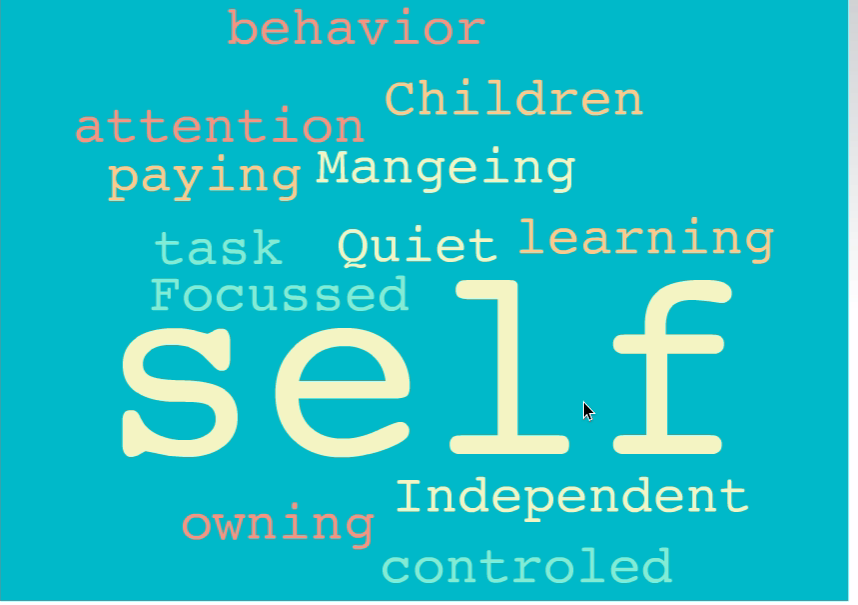
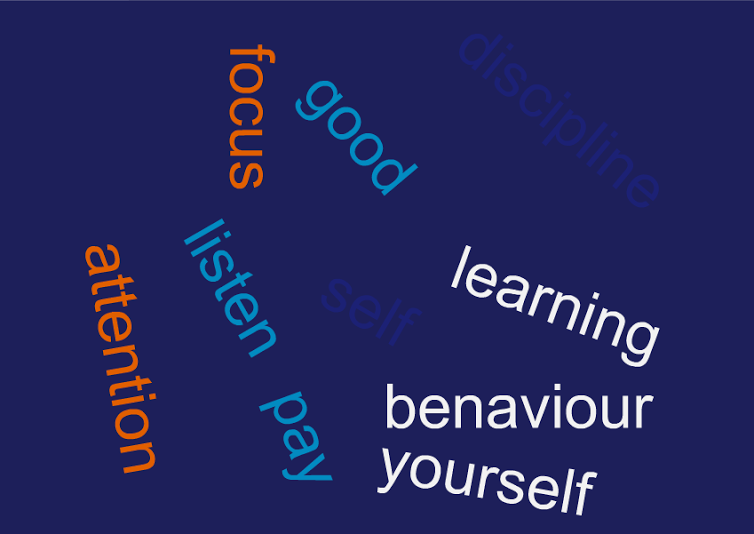
  • Brainstorm  insert wordle - your own words


some of our thinking:


cbhdjqllmk.PNG  
capture image.jpg


What this looks like, feels like and sounds like


What am I going to learn? - your and my thoughts
  • describe how learning happens
  • reading
  • listening
  • concentrating
  • focus
these are some of our OWN words


How am I going to learn this?


  • Interview each other - Ask the question:


What does learning look like, feel like and sound like? (30secs to 60secs only)


upload to google drive- insert into inquiry folder


How will I show what I have learned?


Summarise what you have learned


Listen for key words and supporting/little details - unpack orally what this means


PMI - Oral reflection (your OWN words) about the learning Process


one thing/aspect of the WHOLE learning process that you found positive


one thing/aspect of the WHOLE learning process that you found negative


one thing/aspect of the WHOLE learning process that you found could improve


Saturday, March 14, 2015


Geometry & Fractions Rich Task


Bobby had collection 48 pictures of superheroes that could be described using fractions.  His superheroes were also mapped out on a poster that could be described using translation, rotation and reflection.  Create the design.

What we are doing

We co-constructed the following criteria, Mr Kenny presented and we had input, we changed it a little bit.


SUCCESS CRITERIA


  • use 48 superhero symbols
  • 1 row must show translation
  • 1 row must show reflection
  • 1 row must show rotation
  • any other rows = your choice of 1 of the above
  • each row must be the same superhero symbol


To think about

I wonder what an array is?

Some pics to show what this looks like

Displaying IMG_20150304_142428.jpg  Displaying IMG_20150304_142251.jpg  Displaying IMG_20150304_142248.jpg

Displaying IMG_20150310_122151.jpg  Displaying IMG_20150310_122015.jpg  Displaying IMG_20150306_121736.jpg


Some of our arrays didn't line up perfectly, but it didn't matter 'cause we understood what an array was and beside which as Mr Kenny kept on saying "the LEARNING PROCESS isn't always perfect and it doesn't have to be either" - Oh Boy ! was this was a real learning curve for some of us.

Some videos to show what our learning looks like, sounds like and feels like


Wednesday, February 11, 2015

Working Together Collabratively

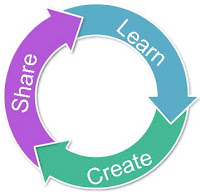
Our learning is all about collaboration LEARN, CREATE, SHARE here are some pics and video of us problem solving cooperatively 

Reflective Symmetry


Solving Tangrams and learning  about FLIP, SLIDE, TURN